In today’s evolving Australian tax environment, compliance alone is no longer enough. While meeting BAS, GST, and payroll obligations is mandatory, proactive tax planning has become a strategic necessity. Therefore, Australian businesses in 2026 must go beyond basic reporting and adopt structured tax planning services to improve profitability and reduce financial risks.
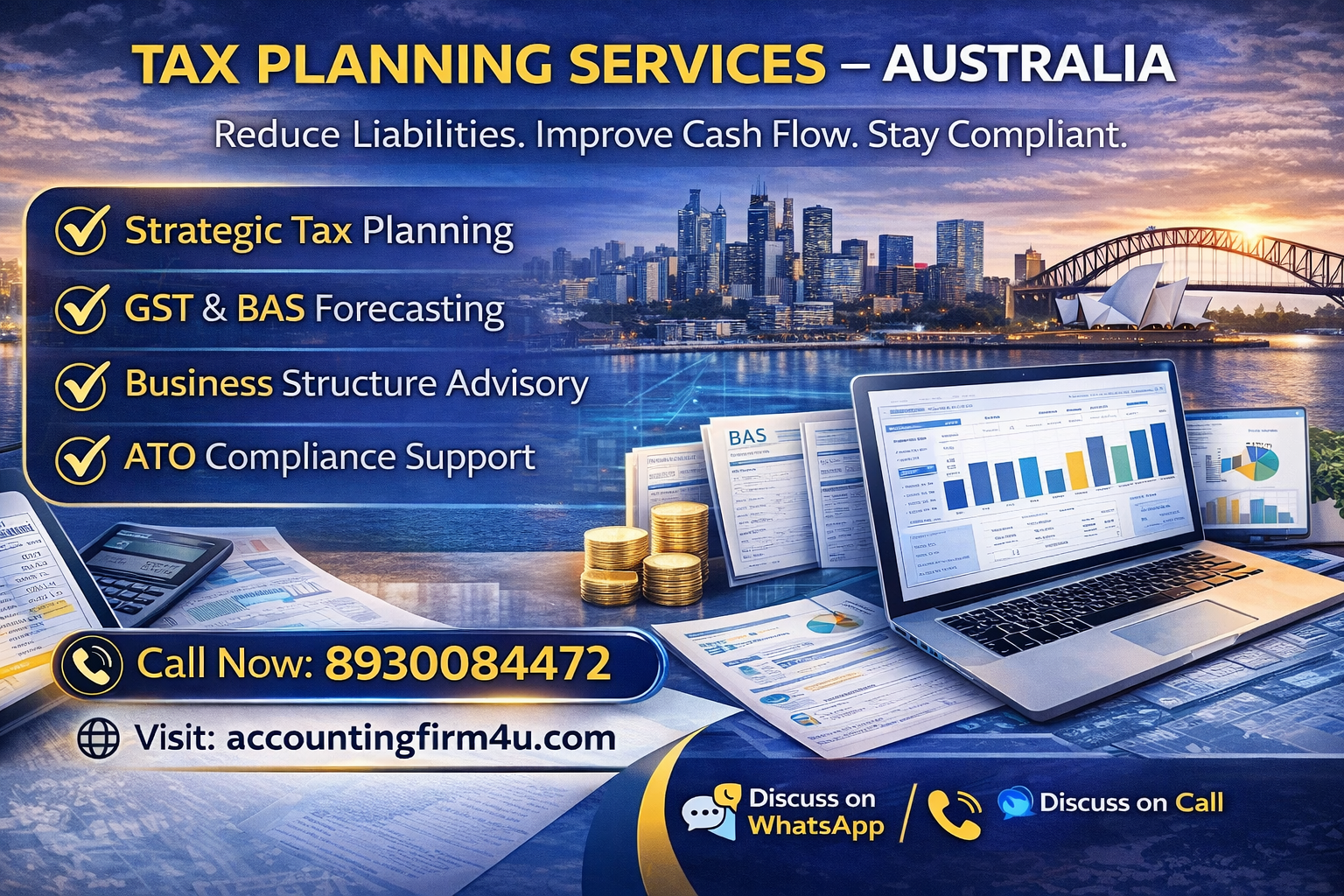
To legally reduce tax liabilities and improve financial efficiency, many businesses now rely on Tax Planning Services Australia for structured and proactive strategies.
Not only does professional tax planning help businesses remain compliant with ATO regulations, but it also enables smarter financial decision-making. As a result, companies that implement effective tax strategies gain a competitive advantage.
Let us explore why tax planning services are essential for Australian businesses.
Understanding Tax Planning vs Tax Compliance
Many business owners mistakenly assume that tax compliance and tax planning are the same. However, they serve different purposes.
- Tax Compliance involves filing accurate tax returns and meeting ATO deadlines.
- Tax Planning, on the other hand, focuses on legally minimizing tax liabilities and optimizing financial performance.
Therefore, while compliance ensures you avoid penalties, planning ensures you maximize profitability.
The Changing Australian Tax Landscape in 2026
Australia’s taxation system continues to evolve. With digital reporting systems, stricter data matching, and automated compliance checks, businesses must be proactive.
Moreover:
- ATO monitoring is increasingly digital.
- GST and BAS reporting must be accurate.
- Payroll compliance under STP is mandatory.
- Corporate tax obligations require detailed documentation.
Consequently, businesses that neglect tax planning risk overpaying taxes or facing compliance issues.
Key Benefits of Professional Tax Planning Services
✅ 1. Reduced Tax Liability
First and foremost, strategic tax planning identifies deductions, credits, and allowable expenses that reduce taxable income.
As a result, businesses legally minimize tax burdens while remaining compliant.
✅ 2. Improved Cash Flow Management
Tax planning allows businesses to forecast liabilities in advance. Instead of facing unexpected tax payments, companies can plan quarterly and annual obligations effectively.
Therefore, cash flow remains stable and predictable.
✅ 3. Strategic Business Structuring
The choice of business structure—sole trader, partnership, company, or trust—directly impacts tax obligations.
Professional advisors help businesses restructure strategically to maximize tax efficiency.
✅ 4. Integration with Cloud Accounting
Modern tax planning integrates seamlessly with digital systems. In fact, many Australian businesses choose to Outsource Xero Accounting Services to ensure real-time tax tracking and accurate financial reporting.
Because of automation, tax calculations become more accurate and transparent.
✅ 5. Risk Reduction
ATO audits can be costly and stressful. However, proactive tax planning ensures documentation, reporting accuracy, and compliance preparedness.
Consequently, businesses reduce legal and financial risks.
Industries That Benefit Most from Tax Planning
Tax planning is especially important for:
- Construction & trade businesses
- E-commerce companies
- Professional service firms
- Healthcare providers
- Technology startups
- Retail businesses
Because these industries experience fluctuating revenues and complex expense structures, strategic planning ensures profitability.
The Role of Forecasting in Tax Planning
Tax planning is closely linked to financial forecasting. Without accurate projections, businesses cannot prepare for future tax obligations.
Professional services provide:
- Quarterly tax estimates
- Profit forecasting
- Expense optimization strategies
- Investment planning
- Asset depreciation analysis
Therefore, businesses gain both clarity and control.
Why SMEs Should Not Ignore Tax Planning
Small and medium-sized enterprises often focus primarily on daily operations. However, without structured planning, they may:
- Overpay taxes
- Miss eligible deductions
- Face cash flow disruptions
- Experience compliance penalties
Therefore, many companies prefer to Outsource Accounting Services in Australia to combine compliance with proactive tax strategy.
By integrating compliance and planning, businesses achieve long-term stability.
2026: A Year of Strategic Financial Management
Australia’s business environment is becoming increasingly competitive. Furthermore, digital transparency makes financial reporting more visible than ever.
Because of this:
- Tax errors are quickly identified.
- Financial records must be accurate.
- Investors demand transparency.
- Banks require structured financial data.
Thus, tax planning becomes an essential part of overall financial strategy.
Common Myths About Tax Planning
Myth 1: Only Large Corporations Need It
On the contrary, SMEs benefit significantly from structured tax planning.
Myth 2: It Is Only Useful at Year-End
However, tax planning should be continuous throughout the financial year.
Myth 3: It Is Expensive
In reality, effective planning often saves more money than it costs.
How Tax Planning Supports Business Growth
Strategic tax planning allows businesses to:
- Reinvest savings into expansion
- Optimize investment strategies
- Improve budgeting accuracy
- Strengthen financial reporting
- Increase profitability
Therefore, tax planning becomes a growth tool rather than just a compliance function.
Final Thoughts
In conclusion, tax planning services are essential for Australian businesses in 2026. While compliance ensures regulatory adherence, proactive planning ensures financial efficiency and profitability.
By combining cloud accounting, structured forecasting, and professional advisory support, businesses can reduce tax liabilities, improve cash flow, and strengthen long-term growth strategies.
Ultimately, effective tax planning is not just about saving money—it is about building a financially resilient and future-ready business.