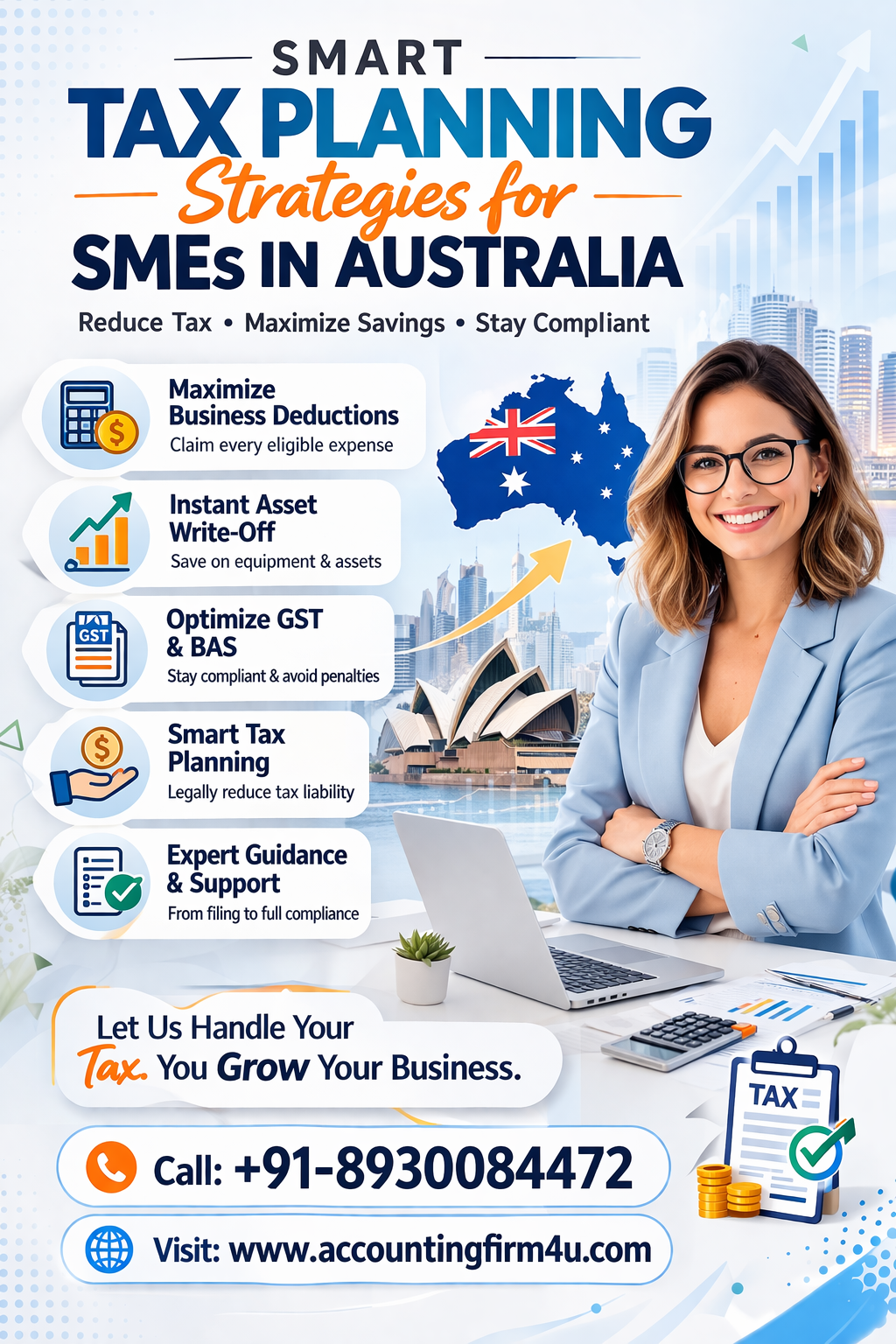
In the competitive Australian business environment, small and medium-sized enterprises (SMEs) must go beyond basic compliance to remain profitable and sustainable. Effective tax planning strategies for SMEs in Australia are essential not only to reduce tax liabilities but also to improve cash flow, ensure compliance, and support long-term growth.
With evolving regulations from the Australian Taxation Office (ATO), businesses need proactive planning rather than reactive tax filing. Whether you’re a startup or an established SME, implementing the right tax strategies can significantly impact your bottom line.
What is Tax Planning and Why It Matters for SMEs?
Tax planning involves analyzing your financial situation to legally minimize tax obligations while staying compliant with Australian laws. Unlike tax evasion, which is illegal, strategic tax planning uses available deductions, offsets, and incentives to optimize your tax position.
Key Benefits:
- Reduce overall tax liability
- Improve cash flow management
- Avoid penalties and audits
- Support business growth
- Enhance financial decision-making
For SMEs, where every dollar counts, smart tax planning is a powerful financial tool.
Top Tax Planning Strategies for SMEs in Australia
1. Maximize Business Deductions
One of the most effective ways to reduce taxable income is by claiming all eligible business deductions.
Common Deductible Expenses:
- Office rent and utilities
- Employee wages and superannuation
- Marketing and advertising costs
- Software subscriptions (e.g., accounting tools)
- Travel and vehicle expenses
Keeping accurate records ensures you don’t miss out on valuable deductions.
2. Take Advantage of Instant Asset Write-Off
The Australian government allows SMEs to immediately deduct the cost of eligible business assets under the instant asset write-off scheme.
This includes:
- Equipment and machinery
- Office furniture
- Technology and software
This strategy helps reduce taxable income while investing in business growth.
3. Optimize GST and BAS Management
Proper management of GST and BAS is crucial for compliance and cash flow.
Best Practices:
- Lodge BAS on time
- Reconcile accounts regularly
- Track GST accurately using accounting software
- Work with a BAS agent or tax consultant
Efficient BAS planning strategies help avoid penalties and improve financial clarity.
4. Structure Your Business Wisely
Choosing the right business structure can significantly impact your tax obligations.
Common Structures in Australia:
- Sole trader
- Partnership
- Company
- Trust
Each structure has different tax rates and compliance requirements. Consulting a tax consultant in Australia can help you choose the most tax-efficient option.
5. Superannuation Contributions
Making additional super contributions for yourself and your employees can provide tax benefits.
Benefits:
- Tax deductions for employer contributions
- Reduced taxable income
- Long-term financial security
Ensure contributions are made before the financial year ends to claim deductions.
6. Defer Income and Accelerate Expenses
Timing plays a crucial role in tax planning.
Strategies:
- Defer income to the next financial year (if possible)
- Bring forward deductible expenses
- Prepay certain costs like rent or insurance
This approach helps manage taxable income effectively.
7. Utilize Tax Offsets and Incentives
The Australian government offers various tax offsets and incentives for SMEs.
Examples:
- Small business tax offset
- Research and Development (R&D) tax incentive
- Export market development grants
Taking advantage of these programs can significantly reduce tax liability.
8. Leverage Technology and Accounting Software
Using modern accounting tools simplifies tax planning and compliance.
Benefits:
- Automated expense tracking
- Real-time financial insights
- Accurate reporting
- Easy BAS lodgement
Cloud-based software ensures your financial data is always up to date.
9. Maintain Accurate Financial Records
Good record-keeping is the foundation of effective tax planning.
Tips:
- Keep receipts and invoices
- Maintain digital records
- Reconcile accounts regularly
- Use accounting software for organization
Accurate records not only help in tax planning but also protect your business during audits.
10. Work with a Professional Tax Consultant
Partnering with a small business tax consultant in Australia ensures expert guidance and compliance.
Benefits:
- Personalized tax strategies
- Up-to-date knowledge of tax laws
- Risk reduction
- Better financial planning
A professional can identify opportunities you might overlook.
Common Tax Mistakes SMEs Should Avoid
Even with the best intentions, SMEs often make mistakes that can lead to penalties.
Avoid These Errors:
- Missing BAS or tax deadlines
- Incorrect GST reporting
- Poor record-keeping
- Claiming ineligible expenses
- Ignoring tax planning until year-end
Proactive planning helps avoid these costly mistakes.
High-Conversion Keywords for SEO Optimization
To attract potential clients searching for tax solutions, include these high-intent keywords:
- Tax planning strategies for SMEs Australia
- Small business tax planning Australia
- Reduce tax legally Australia
- SME tax consultant Australia
- BAS and GST planning Australia
- Tax saving tips for small business
- Business tax strategies Australia
These keywords can improve your search rankings and drive targeted traffic.
The Role of Tax Planning in Business Growth
Tax planning is not just about saving money—it’s about building a sustainable and scalable business.
How It Supports Growth:
- Frees up cash for reinvestment
- Improves financial stability
- Enables better budgeting and forecasting
- Reduces financial risks
SMEs that prioritize tax planning are better positioned for long-term success.
Future Trends in SME Tax Planning
The landscape of tax planning is evolving with technology and regulatory changes.
Emerging Trends:
- AI-driven tax analysis
- Real-time tax reporting
- Increased automation
- Cloud-based financial management
- Digital lodgement systems
Staying ahead of these trends can give SMEs a competitive advantage.
Conclusion
Implementing effective tax planning strategies for SMEs in Australia is essential for reducing tax liabilities, ensuring compliance, and supporting business growth.
By leveraging deductions, optimizing GST and BAS management, using accounting software, and working with experienced tax consultants, SMEs can significantly improve their financial performance.
In today’s dynamic business environment, proactive tax planning is not just an option—it’s a necessity.

Pingback: Top Xero MYOB QuickBooks Accounting Firm Australia