
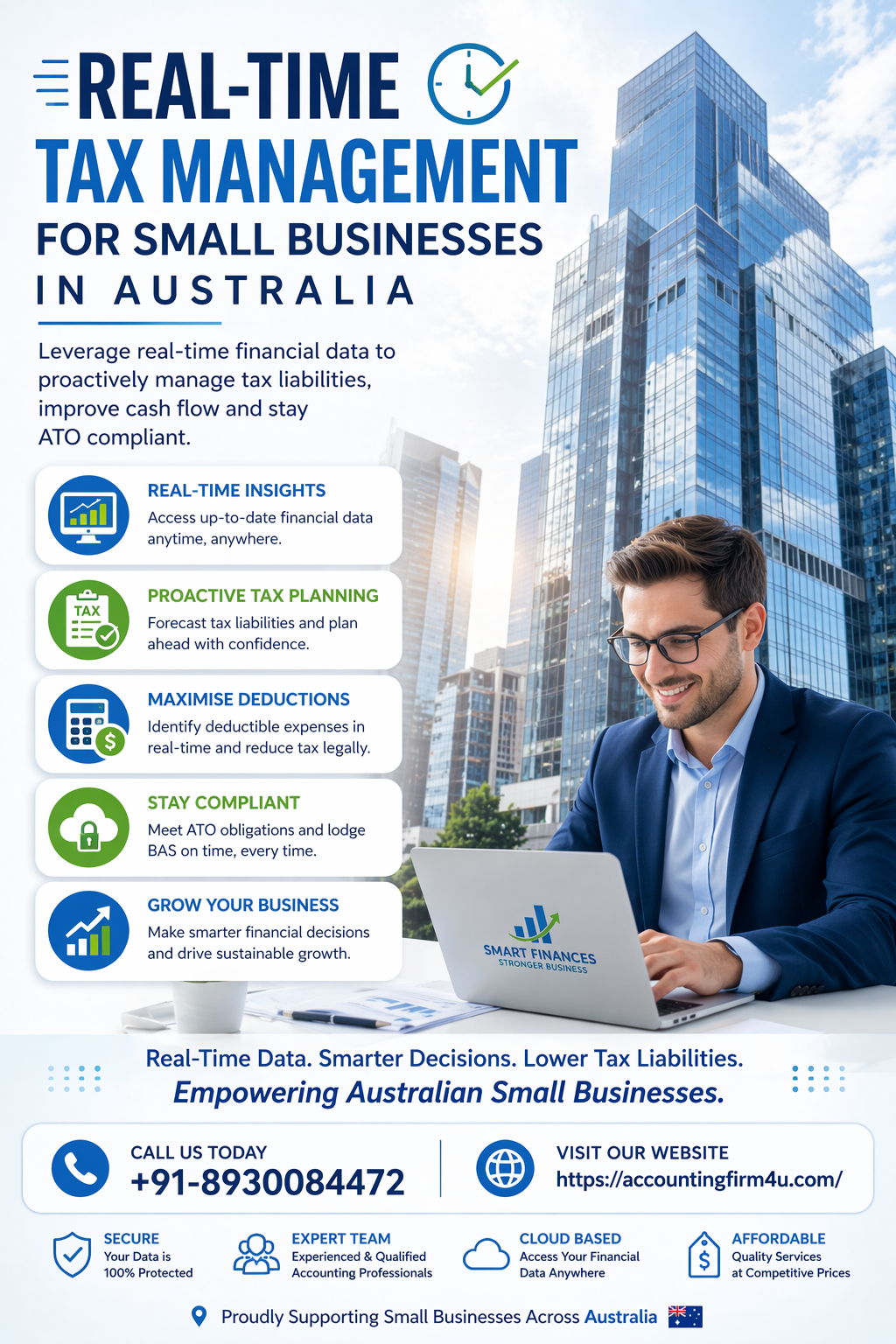
In today’s rapidly evolving financial landscape, Australian small businesses are no longer confined to reactive tax strategies. Instead, they are increasingly embracing real-time financial data to take control of their tax obligations with precision, agility, and confidence.
As compliance requirements from the Australian Taxation Office (ATO) continue to tighten, businesses must shift from traditional, year-end tax preparation to proactive tax management strategies. Leveraging real-time insights not only enhances accuracy but also unlocks opportunities to reduce tax liabilities legally and strategically.
The Shift from Reactive to Proactive Tax Management
Traditionally, many SMEs approached tax planning as a once-a-year task. However, this reactive approach often leads to:
- Missed deductions
- Cash flow challenges
- Last-minute stress
- Increased risk of errors
In contrast, real-time financial data enables businesses to monitor their financial position continuously, allowing them to make informed decisions throughout the year.
Why This Shift Matters
By adopting proactive strategies, businesses can:
- Anticipate tax liabilities in advance
- Optimize deductions and expenses
- Improve financial forecasting
- Avoid penalties and compliance issues
This transformation is not just beneficial—it’s essential for sustainable growth.
What is Real-Time Financial Data?
Real-time financial data refers to continuously updated financial information that reflects the current state of a business’s finances.
Key Components:
- Live income and expense tracking
- Instant bank reconciliation
- Up-to-date GST calculations
- Real-time profit and loss reports
- Cash flow monitoring
With cloud-based accounting systems, this data is accessible anytime, enabling smarter and faster decision-making.
How Real-Time Data Transforms Tax Planning for SMEs
1. Accurate Tax Liability Forecasting
One of the most powerful advantages of real-time data is the ability to estimate tax obligations throughout the year.
Instead of waiting until the end of the financial year, businesses can:
- Track taxable income monthly
- Monitor GST liabilities
- Adjust financial strategies proactively
This ensures there are no surprises when tax deadlines approach.
2. Maximizing Deductions and Tax Benefits
Real-time tracking allows businesses to identify deductible expenses as they occur.
Examples:
- Business-related purchases
- Software subscriptions
- Marketing expenses
- Operational costs
By capturing these expenses instantly, SMEs can ensure they claim every eligible deduction, ultimately reducing their tax burden.
3. Improved GST & BAS Management
For Australian businesses, managing GST and BAS is a critical responsibility.
With real-time data, businesses can:
- Monitor GST payable and receivable
- Prepare accurate BAS reports
- Lodge BAS on time
- Avoid penalties
This level of control significantly improves compliance and reduces stress.
4. Enhanced Cash Flow Management
Tax liabilities directly impact cash flow. Real-time insights help businesses:
- Allocate funds for upcoming tax payments
- Avoid cash shortages
- Plan investments strategically
This ensures financial stability while meeting tax obligations.
5. Data-Driven Decision Making
Access to real-time financial data empowers business owners to make informed decisions.
For example:
- Deciding when to purchase assets
- Timing expenses to maximize deductions
- Planning business expansion
These decisions can significantly influence tax outcomes.
Role of Cloud Accounting Software in Real-Time Tax Management
Modern cloud accounting software in Australia plays a crucial role in enabling real-time financial tracking.
Key Features:
- Automated bank feeds
- Live financial dashboards
- GST tracking and reporting
- BAS preparation tools
- Integration with payroll and invoicing systems
These tools eliminate manual processes and provide accurate, up-to-date information.
Benefits of Real-Time Financial Data for Australian SMEs
1. Increased Financial Transparency
Businesses gain a clear and accurate view of their financial health at any moment.
2. Reduced Risk of Errors
Automation minimizes manual data entry, reducing the likelihood of mistakes.
3. Better Compliance with ATO Regulations
Accurate, up-to-date records ensure compliance and reduce audit risks.
4. Time Efficiency
Automated processes save time, allowing business owners to focus on growth.
5. Competitive Advantage
Businesses using real-time data can respond quickly to market changes and opportunities.
Practical Strategies to Leverage Real-Time Data for Tax Planning
1. Monitor Financial Reports Regularly
Review profit and loss statements, balance sheets, and cash flow reports monthly.
2. Set Aside Funds for Tax Obligations
Use real-time insights to allocate funds for GST and income tax payments.
3. Plan Asset Purchases Strategically
Timing asset purchases can help maximize tax deductions.
4. Work with a Tax Consultant
Professional guidance ensures you’re using data effectively to minimize tax liabilities.
5. Automate Financial Processes
Use accounting software to automate tracking, reporting, and compliance tasks.
Common Challenges and How to Overcome Them
Challenge 1: Lack of Technical Knowledge
Solution: Use user-friendly software and seek professional support.
Challenge 2: Data Overload
Solution: Focus on key financial metrics relevant to tax planning.
Challenge 3: Integration Issues
Solution: Choose software that integrates seamlessly with your business tools.
High-Conversion Keywords for SEO Optimization
To attract targeted traffic, include these high-intent keywords:
- Real-time financial data Australia
- Tax planning software for SMEs
- Proactive tax management Australia
- Small business tax strategies Australia
- Cloud accounting software Australia
- BAS and GST management Australia
- Financial data for tax planning
These keywords help improve search rankings and visibility.
Future of Tax Management in Australia
The future of tax management is driven by technology and automation.
Emerging Trends:
- AI-powered financial insights
- Real-time tax reporting
- Automated compliance systems
- Predictive analytics for tax planning
- Integration with fintech platforms
Businesses that adopt these innovations will stay ahead of the competition.
Conclusion
The ability to proactively manage tax liabilities using real-time financial data in Australia is transforming how small businesses operate.
By leveraging modern accounting tools and adopting a proactive approach, SMEs can:
- Reduce tax liabilities legally
- Improve cash flow
- Ensure compliance
- Make smarter financial decisions
- Achieve sustainable growth
In an increasingly competitive environment, real-time financial data is not just a tool—it’s a strategic advantage that empowers businesses to thrive.